
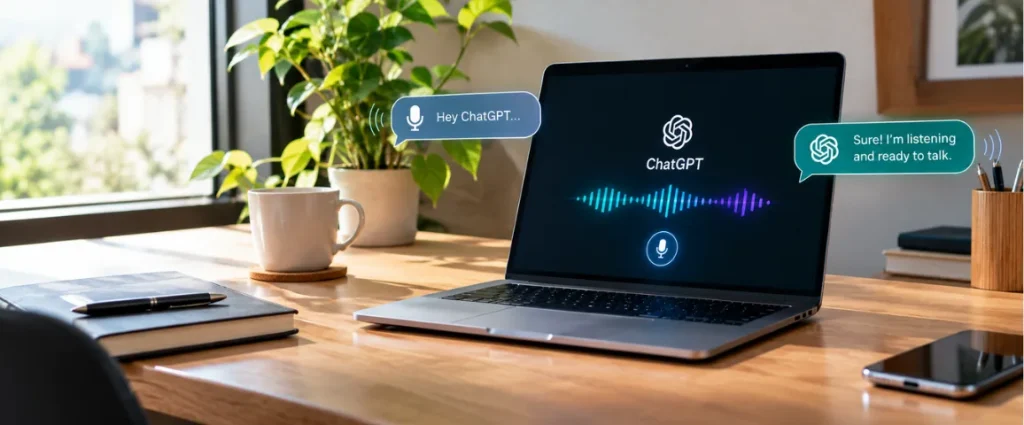
Talking to ChatGPT used to feel like using a walkie-talkie. You spoke, then waited. It spoke, then waited. OpenAI just killed that rhythm.
The company rolled out GPT-Live, a new generation of voice models built to make AI conversations feel more natural and responsive, on iOS, Android, and the web. API access is coming soon.
Here’s what changed, how it works, and whether it actually matters.
What is GPT-Live
GPT-Live is OpenAI’s new voice model, designed to make interacting with AI feel like a genuine human conversation. It replaces Advanced Voice Mode as the engine behind ChatGPT Voice.
The headline feature: a full-duplex architecture that lets the AI listen and speak at the same time. No more raising a hand and waiting to be called on. It can hear you mid-sentence, hold a thought, jump in, or pull back, the way a person does on a call.
The model makes interaction decisions multiple times per second, handling real-time turn-taking, active listening cues, and the ability to pause without interrupting. That’s the “mhm” and the half-second pause that tells you it’s still with you. Small stuff. It’s the stuff that made old voice assistants feel robotic.
Why full-duplex voice matters
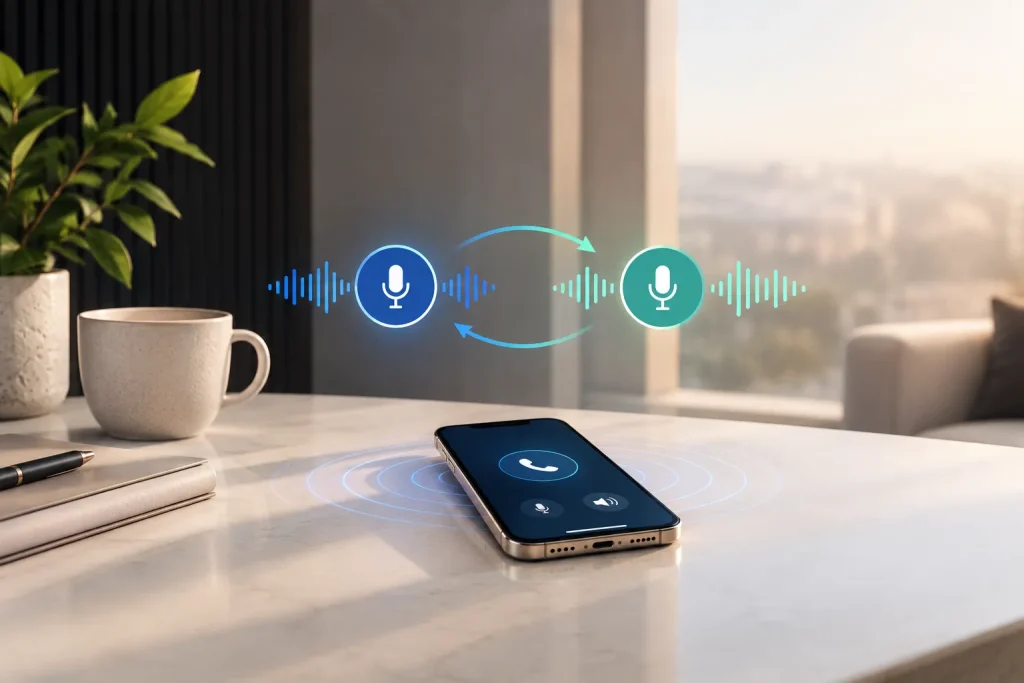
Every voice assistant before this worked on a cascade: transcribe your speech to text, think, generate a response, convert it back to audio. Each step waits for the last one to finish. That’s where the lag came from, and why interruptions felt broken.
GPT-Live can interrupt itself, respond to conversational cues in real time, and maintain context without the awkward pauses that characterized earlier voice interfaces. OpenAI also gave it a more defined and enjoyable personality compared to previous versions.
The split-brain approach: talking vs. thinking
Here’s the clever part. GPT-Live isn’t trying to be both a fast talker and a deep thinker in one model. OpenAI split the job.
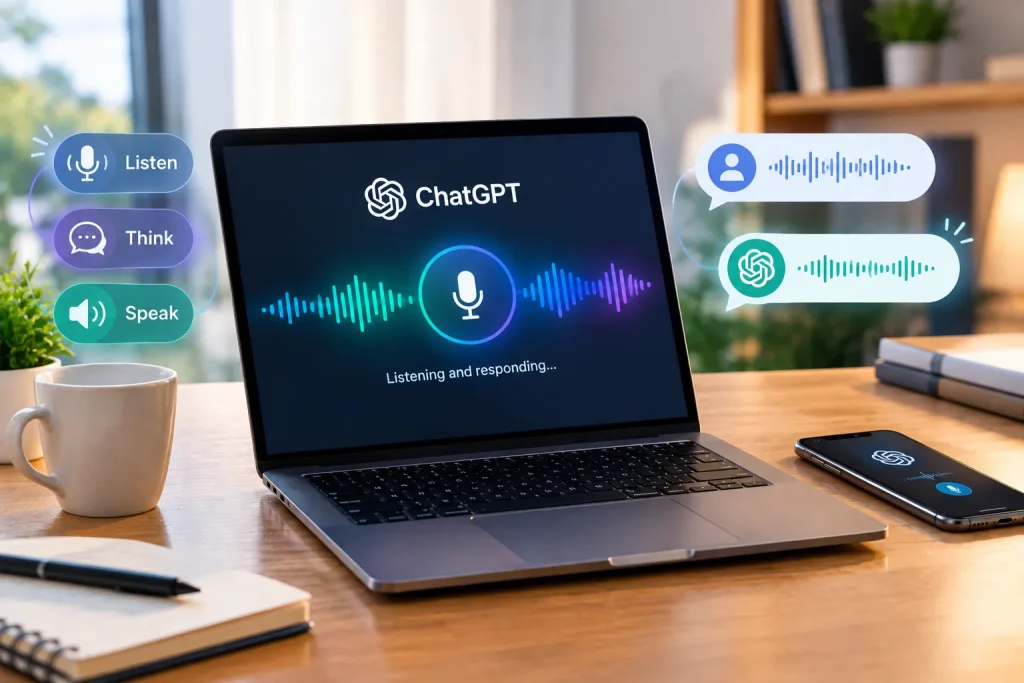
GPT-Live handles the live interaction itself, but when a question needs web search, deeper reasoning, or agentic work, it hands the task to a frontier model behind the scenes, GPT-5.5 at launch, and keeps chatting while the answer is prepared.
So if you ask it something that needs a real search or a multi-step calculation, it doesn’t go silent. It keeps the conversation moving while the heavy lifting happens off to the side, then folds the answer back in when it’s ready.
You also get to choose how much thinking power you want. Users can pick a reasoning level to match the task: Instant for fast responses, or Medium and High, which route background work to GPT-5.5 Thinking at medium and high reasoning effort.
There’s a practical upside to keeping these layers separate, too. Because the interaction layer is decoupled from the reasoning layer, OpenAI can swap in newer frontier models over time without retraining the voice model. Translation: the voice itself doesn’t need to be rebuilt every time OpenAI ships a smarter model.
GPT-Live-1 vs. GPT-Live-1 mini
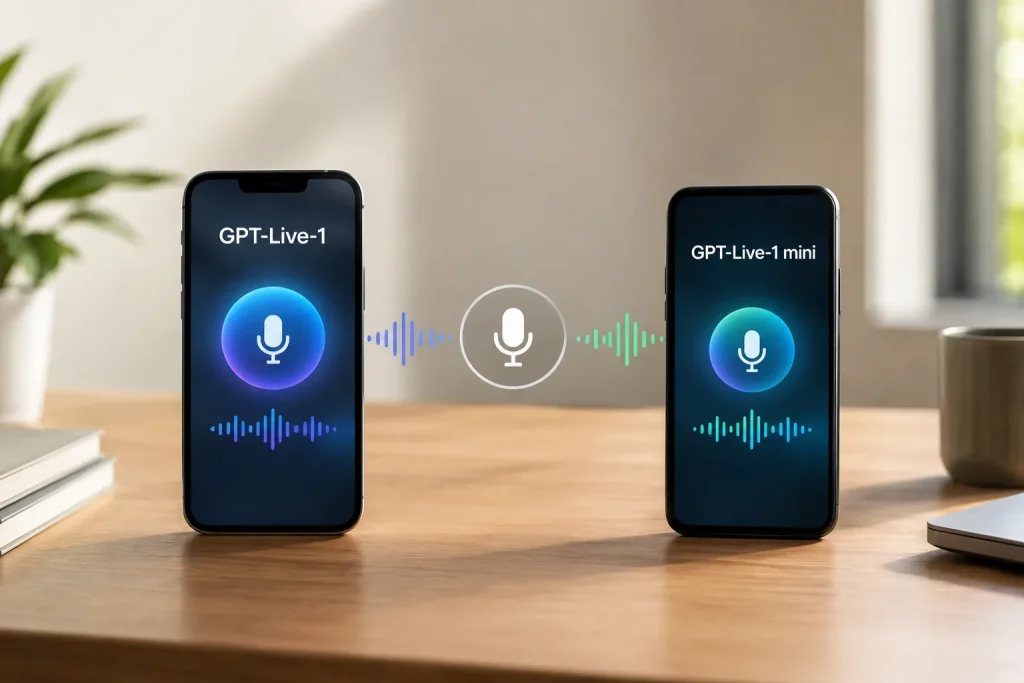
OpenAI shipped two versions. Here’s who gets what.
| Model | Who gets it by default |
|---|---|
| GPT-Live-1 | Go, Plus, and Pro users |
| GPT-Live-1 mini | Free users |
Both are rolling out now. The new ChatGPT Voice experience is rolling out globally across iOS, Android, and ChatGPT.com.
What you can actually do with it
This isn’t just a smoother voice. A few concrete additions:
1. Live translation. The full-duplex setup enables live translations in the middle of a conversation, no need to stop and switch modes.
2. Visual answers while talking. ChatGPT Voice can now show visual cards for topics such as weather, stocks, and sports while users are speaking.
3. Everything else still works. ChatGPT Voice continues to support search, memory, images, and file uploads.If you’re interested in using ChatGPT for images, you can also explore our ChatGPT image prompts for practical ideas.
Does OpenAI have the receipts?
They ran the comparison against the old system. In OpenAI’s new human evaluations, matched 5 to 10 minute conversations scored on overall preference, turn-taking, interruptions, and conversational flow, both GPT-Live-1 and GPT-Live-1 mini were strongly preferred over Advanced Voice Mode.
I’d want to hear it myself before calling that a done deal. Preference scores in a lab setting and a voice assistant holding up during a noisy, real conversation are two different tests.
Should you actually use it for work?
Sounding human and being reliable aren’t the same thing. Worth checking before you build a workflow around it:
1. How it behaves with sensitive information in the conversation.
2. Whether transcripts are retained, and for how long.
3. How model handoff behaves when a task needs the background model.
4. Plan limits between Free, Go, Plus, and Pro tiers.
5. Test it on something low-stakes first. Summarize a call. Compare two calendar slots. Translate a short exchange. See how it holds up before you hand it something that matters.
Discover practical insights into GPT-Live, real-time voice conversations, AI assistance, and ChatGPT’s latest features, along with useful ways to explore its capabilities with One Final Draft.
Frequently asked questions
What is GPT-Live?
GPT-Live is OpenAI’s new generation of voice models built to make speaking with AI feel like a natural conversation, now powering ChatGPT Voice.
What does full-duplex mean in GPT-Live?
It means the AI can listen and speak at the same time, instead of waiting for you to finish before it responds.
Which background model does GPT-Live use?
At launch, it delegates complex reasoning and search tasks to GPT-5.5.
Is GPT-Live available for free users?
Yes. GPT-Live-1 mini is the default for Free users, while GPT-Live-1 is the default for Go, Plus, and Pro users.
Is GPT-Live coming to the API?
OpenAI said it plans to bring GPT-Live to the API soon, with developers and enterprises able to sign up for updates.
Comments are coming soon. In the meantime, share this piece with someone who should read it.