
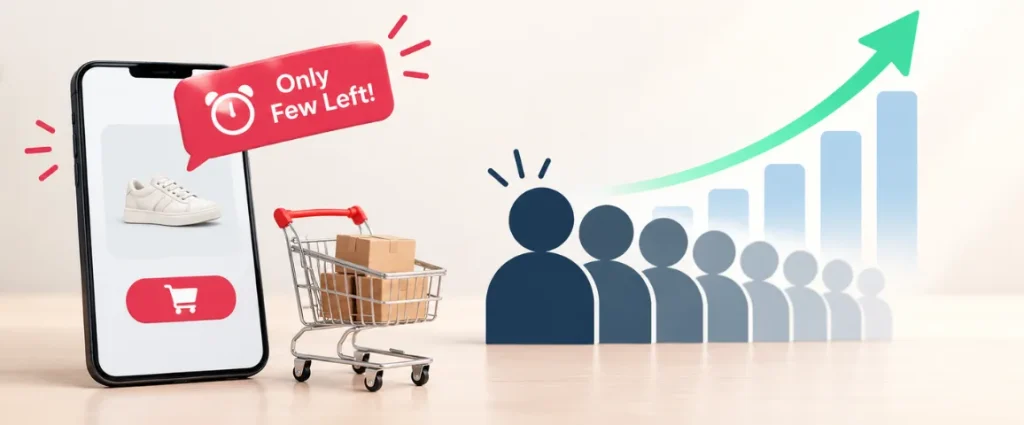
FOMO marketing works well because nobody likes feeling they missed something valuable.
A flash sale ends at midnight. A product page says “only 3 left.” A course closes its enrollment in two days. A restaurant launches a limited-edition menu for one weekend only. As a result, the decision feels more urgent than it did a few minutes ago.
FOMO marketing works because nobody likes feeling they missed something valuable.
This is the real power of the fear of missing out.
But one question that actually arises here is, does scarcity actually increase sales, or does it only create pressure?
Well, the answer is not a simple “yes” or “no.” FOMO marketing can easily increase conversion when it is honest, relevant, and supported by real value. But fake urgency or overused countdowns can easily damage trust. In fact, customers are also quick to notice when every product is “almost sold out.”
“So, to use scarcity well, brands should understand the marketing psychology behind it and not just blindly copy the tactics.”
What is FOMO Marketing?
FOMO marketing is a strategy that encourages people to act because they do not want to miss out on the opportunity. In fact, it makes use of urgency, exclusivity, social proof, and limited availability to influence a purchase decision.
Common examples include the following:
1. Limited-time discounts
2. Low-stock messages
3. Early-bird pricing
4. Exclusive member access
5. Limited-edition products
6. Countdown timers
7. Waitlists
8. “Trending now” or “selling fast” labels
Well, the idea is simple. When people believe that the offer might not be available later, they are most likely to make a quick decision.
This is closely connected to scarcity marketing, where the brands present a product, a service, or an offer as limited in quantity, time, or access. Scarcity can also make something feel more valuable as it appears harder to get.
Why Scarcity Affects Buying Decisions
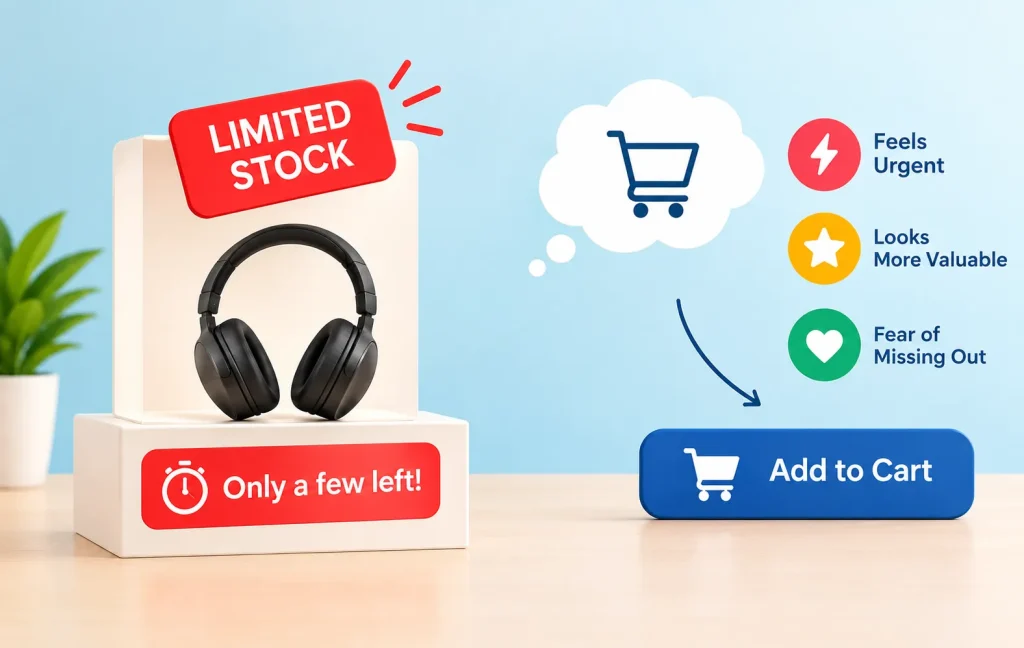
Scarcity works since people often show a greater level of interest and value those things that appear to be limited.
This is not only a marketing idea but also an important part of human behaviour. The scarcity principle, popularized by psychologist Robert Cialdini, suggests that people often crave more opportunities when they become less available.
In simple words, when something appears to be difficult to get, it can feel more desirable.
In situations like these, marketing psychology becomes more important. Customers are not always making completely logical decisions. They often respond to emotional signals such as urgency, popularity, possible regret, or the fear of losing a better deal. These emotional connections also play a role in emotional branding and buying decisions.
For instance, a customer may think the following:
| Scarcity Message | Customer Thought |
|---|---|
| “Offer ends tonight.” | I should decide before the price increases. |
| “Only 2 seats left.” | Others are buying, so this may be worth it. |
| “Limited edition” | I may not get this again. |
| “Early access for members” | This feels exclusive. |
These messages definitely do not force a purchase; instead, they reduce hesitation when the customer is already interested.
Does FOMO Marketing Really Increase Sales?
Yes, FOMO marketing can increase sales, especially when the customer is already close to buying.
It especially works best at the point where someone has an interest but has not yet taken any action. This is commonly seen in e-commerce, online courses, events, travel, beauty, fashion, and subscription-based businesses.
As per the e-commerce research report by the Baymard Institute, the average cart abandonment rate is roughly around 70%. This means that the shoppers add products to their cart but often leave before completing the purchase.
However, a simple time-sensitive offer or a low-stock message can encourage some of these shoppers to return and complete the final purchase. But this will only work if the customer sees value in the product.
The Role of Fear of Missing Out
The fear of missing out is much more than just wanting a discount.
It is the feeling that others may gain something while you lose the chance. This can primarily happen when customers see a product selling out too fast, a limited event filling up, or a popular service being booked by others.
Social proof can make this even stronger.
Common examples include the following:
1. “500 people registered this week”
2. “Most popular plan”
3. “Selling fast”
4. “Booked 12 times today”
5. “Limited seats available”
When social proof and scarcity work together, the message becomes more persuasive. The customer not only sees that the product is limited, but also sees that other people want it.
This combination can create urgency without sounding too pushy, provided the numbers are real.
When Does Scarcity Marketing Work the Best?
Scarcity marketing works in situations when the limitation is genuine.
For example, it makes sense when a hotel has limited rooms, an event has limited seats, a handmade product has limited stock, and a brand is running a seasonal sale.
Moreover, it will also work well in situations where the customers understand the value of the offer. If a product is not clear, urgency may create confusion and not action.
Here is how you can understand this:
| Works Well When | Does Not Work Well When |
|---|---|
| The offer has real value | The product is weak or unclear |
| Scarcity is genuine | The urgency is fake |
| The message is simple | The customer feels pressured |
| The brand is already trusted | The brand has poor credibility |
| The deadline is clear | The same “last chance” keeps returning |
The Rising Risk of Fake Urgency
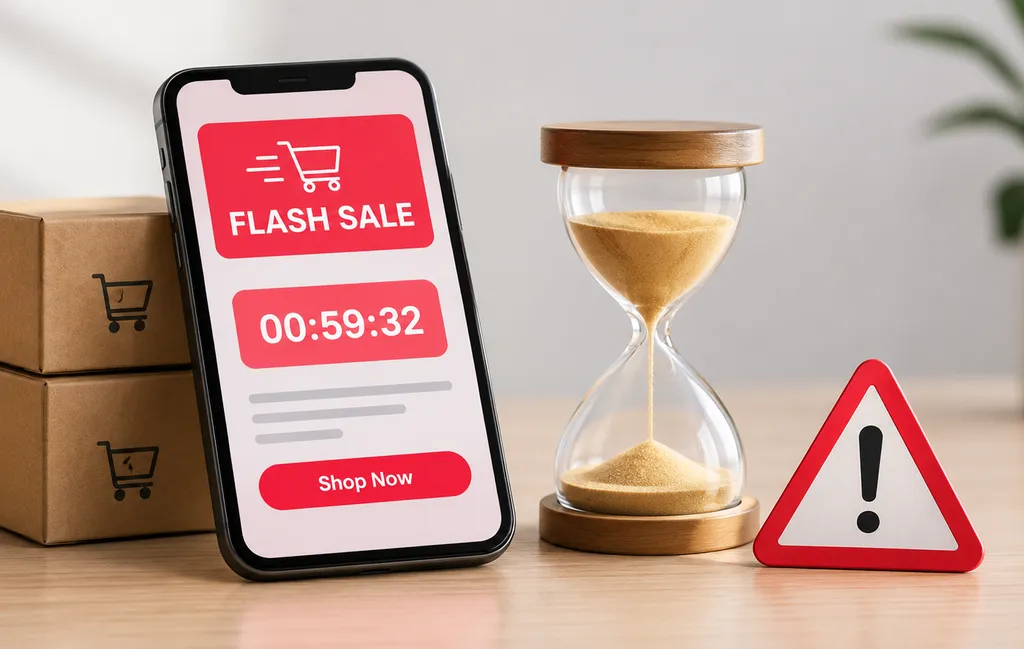
Fake urgency might create short-term clicks, but it can badly damage long-term trust.
Customers today are much more aware of digital marketing tactics. In fact, if they see the same countdown time resetting every day, they might stop believing the brand. Similarly, if every product says “one left,” the message will lose its real meaning.
This can, in turn, impact and weaken credibility.
Here, the problem is not FOMO marketing, but the dishonest execution.
Poor use of scarcity can lead to the following situations:
1. Lower trust
2. Higher refund requests
3. Negative reviews
4. Reduced repeated purchases
5. Customer hesitation in future campaigns
A customer may buy once when under pressure, but they might not return if they feel manipulated.
This is the reason why ethical marketing psychology matters. A brand should help the customers make decisions and not make them feel trapped.
Ethical Ways to Use FOMO Marketing
The most effective FOMO marketing is genuine, clear, and comprehensible.
This kind of marketing can be used responsibly by just sticking to a few guidelines:
| Ethical Approach | Example |
|---|---|
| Use real deadlines | “Sale ends on 30 July.” |
| Show true stock status | “Only 5 pieces available.” |
| Explain the reason for scarcity | “Limited batch due to handmade production” |
| Avoid constant pressure | Do not use urgency on every product |
| Make terms clear | Mention refund, delivery or booking conditions |
The aim here is to establish credibility.
For instance, a skincare company could state, “Special introductory offer valid only in the first 500 orders.” This is credible information. A training institution could claim, “Only 40 seats are available per batch to ensure individual attention.” The reasons behind the availability of seats are made known.
In other words, these messages have more weight because they provide consumers with an explanation.
How Can Brands Use Scarcity Without Sounding Too Pushy
Good scarcity messaging has to be organic to the customer experience.
The need for screaming, “Buy now before it’s all gone,” can be done away with.
For instance,
1. “Early bird offers expire this Friday.”
2. “This batch will only be available till stocks last.”
3. “A few slots available for appointments this week”
4. “Applications end 15th August”
5. “Limited festive collection online”
The lines above make the reader feel the urgency without being threatening.
It is also important that brands align their tactics with the nature of their products. A luxury brand can leverage exclusivity. An online class can take advantage of time-based incentives. A clothing brand can leverage limited stock.
Different strategies work differently for different types of products.
FOMO Marketing and Customer Trust

Effective use of FOMO marketing doesn’t just drive more sales. It ensures integrity.
This is because the marketer needs to be upfront about the following:
1. Time frame of the promotion
2. Quantity of items in the stock
3. Eligibility for accessing the offer
4. What comes next when the promotion ends
5. If the promotion will occur again in future
Being transparent builds credibility. It also ensures that the promotion seems professional.
When there’s already trust between the brand and its consumers, scarcity acts as a great reminder. But without any trust, it acts as a pressure tactic.
This is why FOMO shouldn’t ever stand alone. It must be accompanied by comprehensive product details, price transparency, real customer reviews, a smooth checkout experience, and excellent customer service.
Wrapping Up
Yes, scarcity does have an impact on sales, but only when the approach is implemented properly.
FOMO marketing tactics work because they appeal to genuine human emotions. Indeed, they may decrease the delay and increase urgency for the action.
At the same time, it works best when the offer is relevant to the consumer.
Scarcity marketing done right will result in increased conversions without any damage to the customer’s perception of the brand. Otherwise, brands implementing false urgency will achieve short-term success but will harm their reputation in the long run.
So, scarcity marketing is not magic, but it is just a gentle push.
If done carefully, scarcity marketing may assist consumers in making timely decisions. If done irresponsibly, it will simply be seen as noise.
Stay updated with marketing trends, consumer behaviour, and sales strategies. Learn how FOMO marketing influences buying decisions and helps businesses increase sales with scarcity tactics. Find more marketing insights on One Final Draft.
Frequently asked questions
Explain FOMO marketing.
FOMO marketing refers to the practice of making people make a move since they don’t want to lose an offer, product, or opportunity that is limited.
Is scarcity marketing effective?
Yes, it could be very effective when there is a real limitation and when the offer has value. It should work as a nudge for a decision-making process.
Why does fear of missing out influence purchasing decisions?
Fear of missing out brings in urgency. Customers will make their decision faster when they think the opportunity will not be there anymore.
Will FOMO marketing hurt the reputation?
Yes, practices like fake countdowns, fake stock information, and constant “last chance” opportunities hurt trust.
Comments are coming soon. In the meantime, share this piece with someone who should read it.