
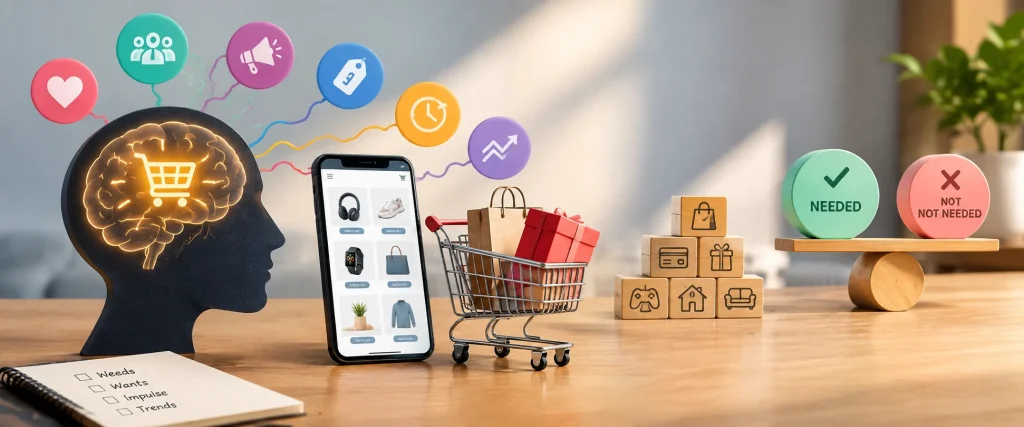
Most of us have bought something and later questioned ourselves, “Why did I even buy this?”
It could be a new outfit, a kitchen gadget, a skincare product, a phone accessory, or a limited-period sale item. At that very moment, the purchase feels useful, exciting, and even necessary. A few days later, it sits unused.
This is where buying behaviour becomes interesting.
Well, people do not make purchases only based on logic. Many purchasing decisions are also shaped by emotions, habits, social influence, convenience, and smart marketing. Sometimes, a product solves a real problem. At the same time, it simply satisfies a feeling.
So, understanding buying behaviour helps us to see why people spend money on things they truly do not need. Moreover, it also helps the brands to understand a customer better without depending too much on discounts, pressure, and guesswork.
What Does Buying Behaviour Mean?
Buying behaviour refers to the way people choose, purchase, use, and respond to products and services. It includes thoughts, emotions, and actions that happen before and after a purchase.
In simple words, it explains why people buy and what they buy.
For instance, one person may buy a premium water bottle because it looks stylish. Another one buys the same bottle that their favourite influencer uses it. Someone else may buy it because they want to build healthier buying habits.
Here, the product is the same, but the reason behind the purchase is different.
That is why marketers study consumer buying behaviour as it helps them to understand what customers truly value, what makes them hesitant, and what factors push them to complete a purchase.
As per the buyer decision process explained on Wikipedia, customers often move through different stages like recognising a need, searching for information, comparing options, making a purchase, and then evaluating the complete experience.
In reality, this process is not well-structured, as the majority of the purchases happen quickly, emotionally, and without an in-depth comparison.
How Does the Buying Behaviour Make Wants Feel Like Needs?
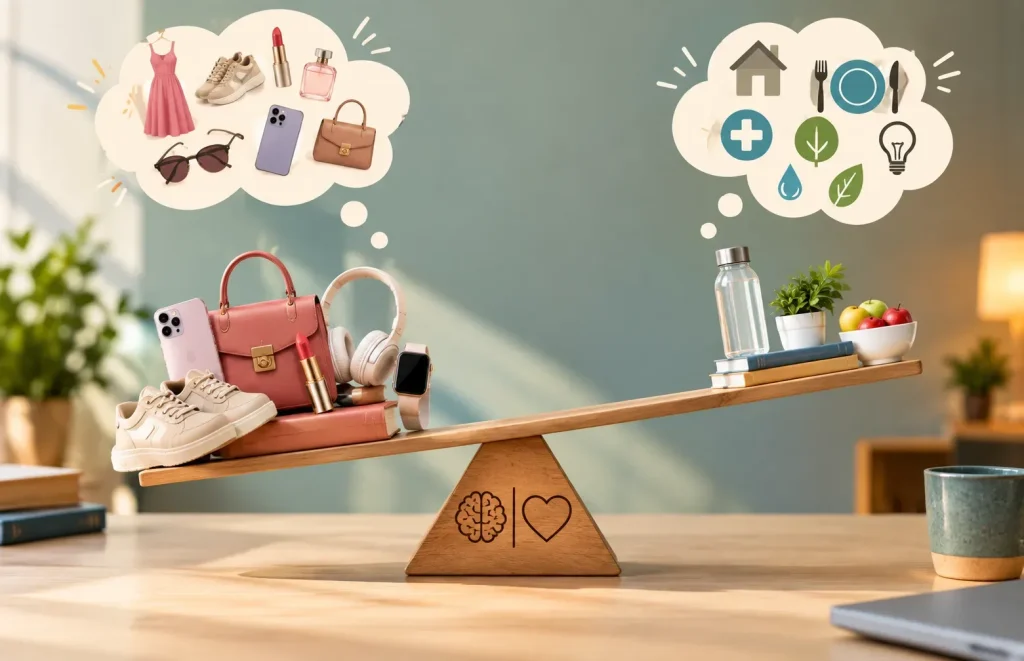
One of the major reasons why people buy unwanted products is that their wants often start feeling like their needs.
A person may not need another pair of shoes, but they may feel that they need them for confidence. They may not require a new phone, but they may feel left out when everyone else upgrades. They may not need a luxury candle, but it may make their room feel more peaceful and positive.
This is how buying behaviour actually works at an emotional level. The purchase is not only about the product, but it is also about the feeling attached to it.
People often buy products as they want to feel:
1. More confident
2. More organised
3. More successful
4. More attractive
5. More relaxed
6. More control
7. More accepted
This is the reason that the brands do not only sell the features. But they also sell the outcomes, identity, and emotions. A fitness watch may not only track steps. It sells discipline. A luxury bag does not only carry items. It sells status. A skincare product not only moisturises skin. But it also sells self-care and confidence.
The Role of Emotions in Purchasing Decisions
Emotions have a strong influence on purchasing decisions.
People often purchase things when they are happy, sad, stressed, bored, lonely, or anxious. Shopping can create a quick sense of reward. It can also feel like a small escape from the usual routine.
Well, the shorter the gap between desire and purchase, the easier it becomes to spend.
This also does not mean that all the emotional purchases are bad. A thoughtful gift, a comforting product, or a personal treat can add value. The real problem starts when emotional spending becomes a regular pattern and later leads to regret.
Social Influence and the Fear of Missing Out (FOMO)
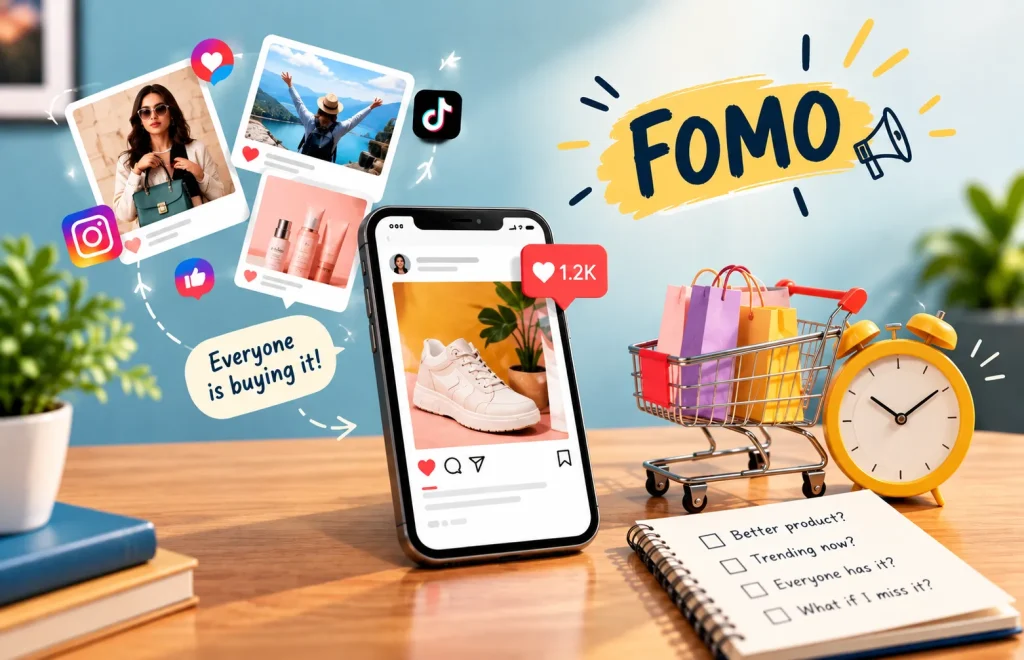
People are social by nature. As a result, their buying behaviour is often shaped by what others are doing.
If friends are using a product, it may feel more trustworthy. If influencers recommend it, it may feel desirable. If a product is trending online, people may feel they are missing out by not buying it.
This is commonly seen in fashion, beauty, gadgets, food, fitness, and lifestyle products.
Social media has made the effect even stronger. People see curated routines, room makeovers, travel products, desk setups, outfits and skincare shelves every day. These visuals can quietly influence the buying behaviour of the consumer.
For them, the product starts representing a lifestyle.
A person may not only want the item, but they also want the version of life that appears to come with it.
That is why “everyone has it” becomes a powerful buying reason, even when the product is not a necessity.
Marketing Makes Products Feel Urgent
Marketing definitely does not force people to buy, but it can strongly shape the buying behaviour of the customer.
Brands often use urgency and scarcity to make the products feel more important. Phrases like “limited stock”, “sale ends tonight”, “only a few stocks left”, and “exclusive offer” further push the customers to act quickly.
These messages reduce the logical thinking time.
When people believe they may lose a good deal, they often end up making fast purchasing decisions. The constant fear of missing out becomes even stronger than the need to evaluate the product.
Other marketing triggers mainly consist of the following:
1. Attractive packaging
2. Easy returns
3. Free delivery
4. Bundle offers
5. Loyalty points
6. Influencer reviews
7. Before and after results
8.Personalised recommendations
These tactics work easily because they connect with the already existing buying habits. If someone already enjoys browsing offers, a sales alert may lead to unnecessary purchases.
Buying Habits Make Spending Automatic
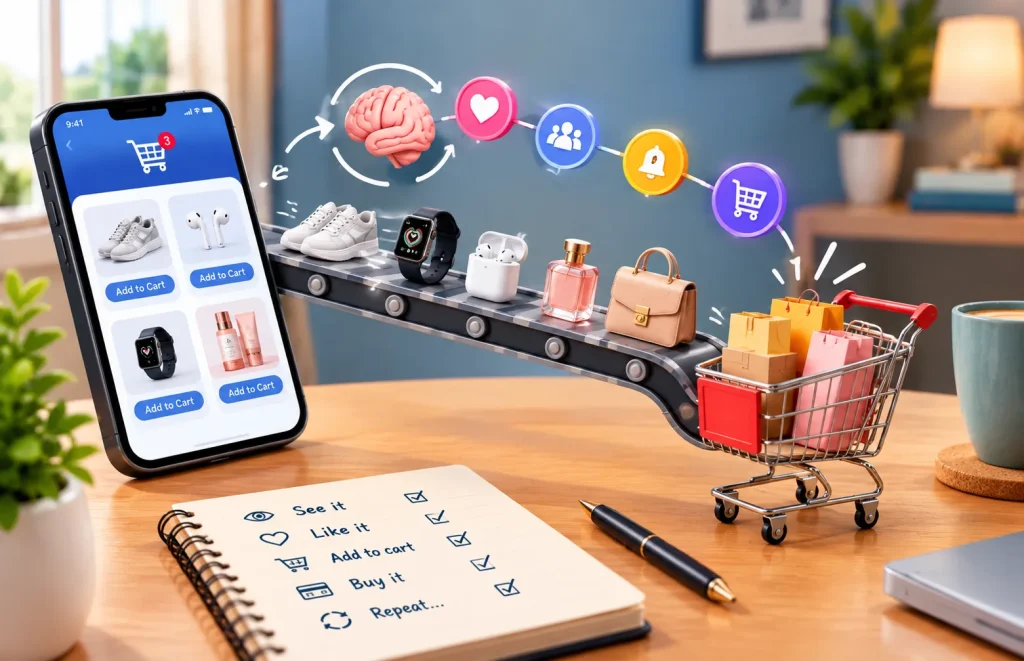
Not every purchase indeed begins with a strong desire. Some purchases happen because of a routine.
As a result, these buying habits can develop slowly. A person may start ordering coffee every morning, buying clothes during every sale and adding extra products to qualify for the free delivery.
As time passes, these actions will become automatic.
The customer may not pause to ask, “Do I need this?” The mind has already connected the action with comfort, reward, or convenience.
Common automatic buying habits include the following:
1. Browsing shopping apps when bored
2. Buying during every online sale
3. Adding low-cost items without thinking
4. Ordering food even when groceries are available
5. Purchasing new versions of products already owned
These habits may feel harmless at first, but they can create clutter, wasted money, and post-purchase guilt.
The Power of Identity in Consumer Buying Behaviour
Many purchases are connected to identity.
People often buy products that match who they are or who they want to become. This is an important part of identity in consumer buying behaviour.
A person who wants to feel productive may buy planners, desk organisers, and productivity tools. Someone who wants to feel health-conscious may purchase supplements, gym wear, and fitness devices. A person who wants to appear premium may choose luxury brands.
The product becomes a symbol.
This type of buying behaviour is not always about practical use. But it is about self-expression. People use products to communicate taste, values, success, lifestyle, and personality.
Brands understand this very well, and that is why they create messaging around aspiration. They do not simply say, “Buy this product.” They suggest, “This product fits the person you want to become.”
Why Do People Regret Unwanted Purchases?
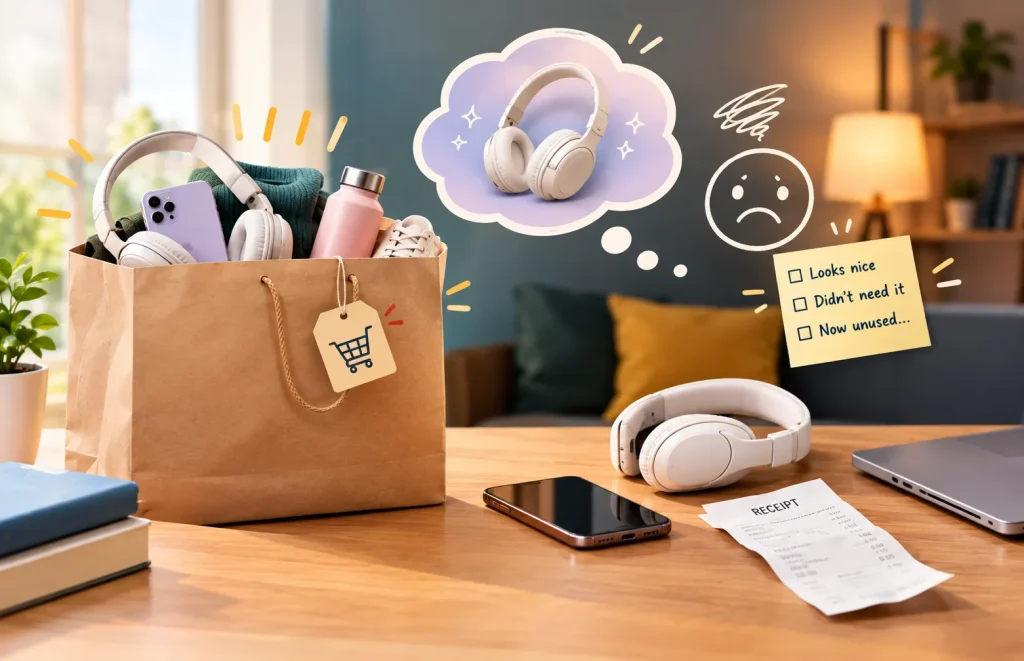
Post-purchase regret generally happens when the excitement of buying starts fading.
At that point, customers may realise that the product is not as useful as they expected. It may not fit well into their lifestyle, solve their problems, or justify the price.
This regret is common when purchasing decisions are made too quickly.
People may regret buying when:
1. The product was bought only because of the discount.
2. They already owned something similar.
3. The product was influenced by social pressure.
4. They did not compare better options.
5. The product solved a temporary emotion and not a real need.
Regret is an important part of buying behaviour as it affects human trust. If customers feel disappointed, they may avoid the brand later or share negative feedback.
Therefore, for brands, this is a reminder that short-term sales should not come at the cost of long-term customer satisfaction.
How Should Brands Respond With Integrity?
Understanding buying behaviour should not only be used to push more sales. Responsible brands can use these insights to create better customer experiences.
They can help the customers make clearer decisions by offering the following options:
1. Honest product descriptions
2. Clear benefits and limitations
3. Real customer reviews
4. Size guides and comparison tools
5. Transparent pricing
6. Helpful after-sales support
7. Easy cancellation and return policies
This approach helps in building trust.
When customers feel informed, they are more likely to make confident purchasing decisions. They may purchase only a few unnecessary products, but they are more likely to stay loyal to a brand.
How Can Customers Improve Their Buying Habits?
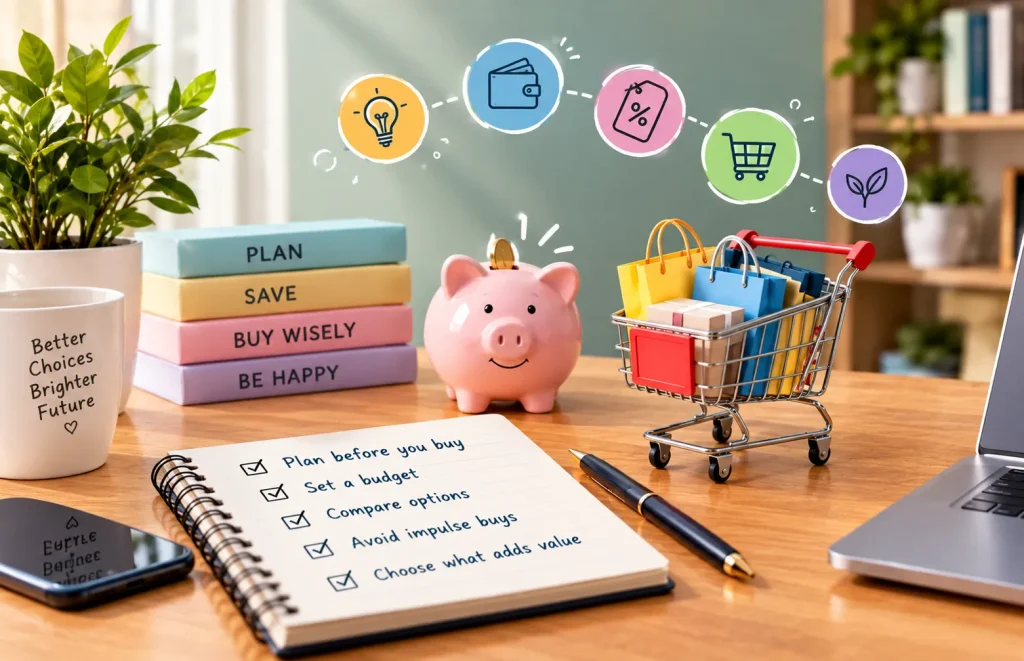
Customers can also become more aware of their own buying habits.
Before buying anything, it is a good idea to pause and ask a few basic questions, like:
1. Do I need this now?
2. Do I already own a similar product?
3. Am I buying this because of stress or boredom?
4. Would I still want it without a discount?
5. Will I use it after a month?
6. Does it fit into my budget?
A short pause can change the buying behaviour of the customer.
For non-essential products, waiting for 24 hours can be useful. If the product still feels important the next day, the purchase may be more thoughtful. However, if the desire fades, it was probably an impulse decision.
Why People Buy Products They Do Not Need
Buying behaviour becomes easier to understand when we look at the emotions, habits and triggers behind unnecessary purchases.
| Reason Behind the Purchase | How It Influences Buying Behaviour | Common Example |
|---|---|---|
| Emotional buying | People buy to feel happy, comforted, confident or rewarded | Buying clothes, skincare or food after a stressful day |
| Social influence | People feel encouraged to buy what others are using or recommending | Purchasing a product after seeing it on social media |
| Fear of missing out | Limited offers make customers feel they may lose a good deal | Buying during a flash sale or “limited stock” offer |
| Automatic buying habits | Repeated actions make spending feel normal and effortless | Ordering coffee daily or browsing shopping apps when bored |
| Identity-based buying | People buy products that match who they want to become | Buying fitness gear to feel more disciplined or health-focused |
| Convenience | Easy payments, free delivery and quick checkout reduce thinking time | Adding extra items to qualify for free delivery |
| Marketing triggers | Discounts, packaging, reviews and recommendations make products feel more appealing | Buying a product because it has strong reviews or influencer approval |
Wrapping Up
People often buy products they don’t need for many reasons. Some purchases are driven by emotion, while some come from social pressure. Others happen due to strong marketing, automatic habits, or a desire to build a certain identity.
This is why buying behaviour is more complex than simple need and supply.
For customers, understanding these patterns can also help in reducing unwanted spending and regret. For brands, it may lead to better marketing, efficient and clear communication, and stronger trust.
Here, the goal is not to remove emotion from shopping, as that would be impossible. But the aim is to make purchasing decisions more conscious.
When people are able to understand why they buy, they can easily build healthier buying habits. When brands also understand their customers easily, they can create value beyond sales.
Learn why people make unnecessary purchases by exploring emotions, habits, social influence, marketing triggers, and smarter buying decisions with One Final Draft.
Frequently asked questions
What is meant by buying behaviour?
Buying behaviour can be defined as a process where people choose, buy, use, and respond to the products and services. It includes emotions, habits, needs, social influence, and decision-making.
Why do people buy products they no longer need?
People often purchase unnecessary products because of emotions, discounts, social pressure, trends, convenience, and a desire to feel better about themselves.
How does the consumer's buying behaviour affect brands?
Consumer buying behaviour enables the brands to understand what the customers want, why they buy, and what influences their choices. This also helps the brands to improve their products, messaging, and customer experiences.
How can people improve their buying habits?
People can easily improve their buying habits by pausing before purchases, setting a budget, avoiding emotional shopping and asking whether the product is genuinely useful or not.
Comments are coming soon. In the meantime, share this piece with someone who should read it.